
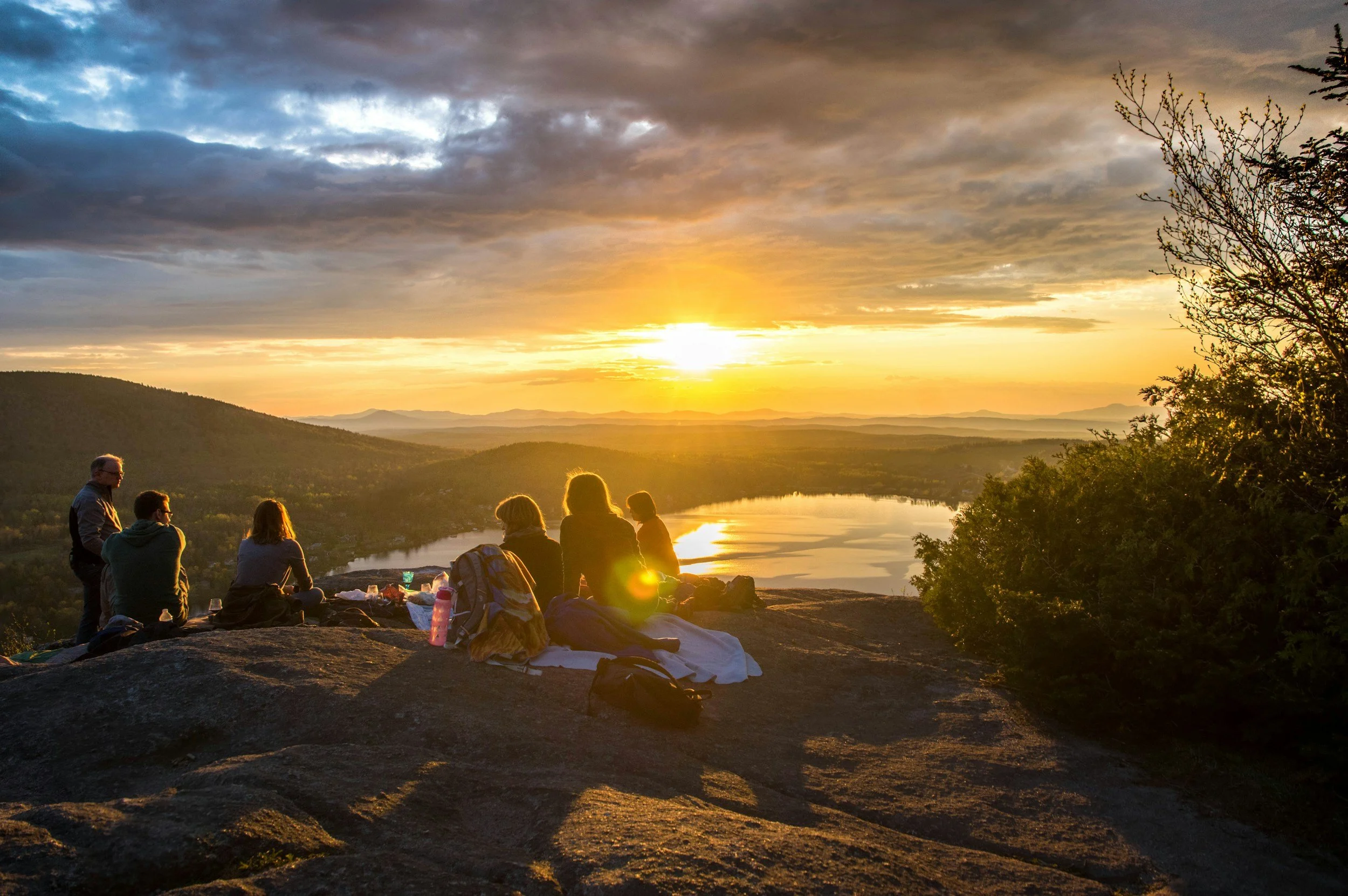
Spirituality Beyond the Self: Why “Me First” Isn’t Sacred and Community Is
Spirituality Beyond the Self: Why “Me First” Isn’t Sacred—and Community Is
There’s a version of modern spirituality that feels… off. It’s polished, aesthetic, and endlessly focused on the self: my healing, my energy, my peace, my boundaries, my growth. On the surface, it sounds empowering. But underneath, it often mirrors the very systems it claims to reject—especially patriarchy, with its emphasis on hierarchy, control, and individual dominance dressed up as “independence.”
Let’s be honest: a spirituality that begins and ends with me isn’t liberation. It’s isolation with better branding.
Patriarchal systems thrive on separation. They teach us to compete instead of collaborate, to prioritize personal gain over collective well-being, to see ourselves as self-contained units rather than interconnected beings. When spirituality gets filtered through that lens, it becomes another tool of disconnection—another way to optimize the self while ignoring the whole.
That’s where a different vision emerges: a kind of spirituality that isn’t about constant self-improvement, but about remembering relationship. Call it matriarchal, earth-based, ancestral, or simply human—it centers community, reciprocity, and belonging.
In this space, healing isn’t a solo journey. It’s something we do with each other.
The idea that “self-care” is the pinnacle of spirituality deserves a closer look. Rest matters. Boundaries matter. Tending to your needs matters. But when self-care becomes self-absorption—when it disconnects us from responsibility to others—it stops being spiritual. It becomes consumption.
Real spirituality asks more of us than that.
It asks:
Who are you accountable to?
Who benefits from your healing?
Who holds you when you fall apart—and who do you show up for in return?
A community-rooted spirituality understands that growth isn’t just internal. It’s relational. It shows up in how we listen, how we share, how we repair harm, how we hold space for others without turning everything back toward ourselves.
In this framework, “wild bloom” isn’t about becoming your best, most optimized self in isolation. It’s about growing in relationship—messy, entangled, alive. Like a forest, not a single potted plant.
There’s something deeply spiritual about mutual care. About checking on someone without being asked. About sharing resources. About grieving together. About celebrating without comparison. These acts don’t trend on social media the way “self-care routines” do, but they are the quiet infrastructure of real connection.
And connection is sacred.
A spirituality rooted in community doesn’t erase the self—it places the self. You are not the center of everything, but you are an essential part of something larger. Your healing matters not just because it improves your life, but because it impacts the web of relationships you’re part of.
That’s the shift: from me to we. From performance to presence. From consumption to contribution.
Patriarchy tells us power is control.
Community-centered spirituality reminds us power is connection.
So yes—take care of yourself. Rest. Reflect. Grow. But don’t stop there. Let your spirituality extend beyond your own edges. Let it root into something shared, something collective, something alive.
Because in the end, we don’t bloom
There’s a version of modern spirituality that feels… off. It’s polished, aesthetic, and endlessly focused on the self: my healing, my energy, my peace, my boundaries, my growth. On the surface, it sounds empowering. But underneath, it often mirrors the very systems it claims to reject—especially patriarchy, with its emphasis on hierarchy, control, and individual dominance dressed up as “independence.”
Let’s be honest: a spirituality that begins and ends with me isn’t liberation. It’s isolation with better branding.
Patriarchal systems thrive on separation. They teach us to compete instead of collaborate, to prioritize personal gain over collective well-being, to see ourselves as self-contained units rather than interconnected beings. When spirituality gets filtered through that lens, it becomes another tool of disconnection—another way to optimize the self while ignoring the whole.
That’s where a different vision emerges: a kind of spirituality that isn’t about constant self-improvement, but about remembering relationship. Call it matriarchal, earth-based, ancestral, or simply human—it centers community, reciprocity, and belonging.
In this space, healing isn’t a solo journey. It’s something we do with each other.
The idea that “self-care” is the pinnacle of spirituality deserves a closer look. Rest matters. Boundaries matter. Tending to your needs matters. But when self-care becomes self-absorption—when it disconnects us from responsibility to others—it stops being spiritual. It becomes consumption.
Real spirituality asks more of us than that.
It asks:
Who are you accountable to?
Who benefits from your healing?
Who holds you when you fall apart—and who do you show up for in return?
A community-rooted spirituality understands that growth isn’t just internal. It’s relational. It shows up in how we listen, how we share, how we repair harm, how we hold space for others without turning everything back toward ourselves.
In this framework, “wild bloom” isn’t about becoming your best, most optimized self in isolation. It’s about growing in relationship—messy, entangled, alive. Like a forest, not a single potted plant.
There’s something deeply spiritual about mutual care. About checking on someone without being asked. About sharing resources. About grieving together. About celebrating without comparison. These acts don’t trend on social media the way “self-care routines” do, but they are the quiet infrastructure of real connection.
And connection is sacred.
A spirituality rooted in community doesn’t erase the self—it places the self. You are not the center of everything, but you are an essential part of something larger. Your healing matters not just because it improves your life, but because it impacts the web of relationships you’re part of.
That’s the shift: from me to we. From performance to presence. From consumption to contribution.
Patriarchy tells us power is control.
Community-centered spirituality reminds us power is connection.
So yes—take care of yourself. Rest. Reflect. Grow. But don’t stop there. Let your spirituality extend beyond your own edges. Let it root into something shared, something collective, something alive.
Because in the end, we don’t bloom

Small Steps Create Big Shifts
It All Begins Here
Confidence doesn’t always arrive with a bold entrance. Sometimes, it builds quietly, step by step, as we show up for ourselves day after day. It grows when we choose to try, even when we’re unsure of the outcome. Every time you take action despite self-doubt, you reinforce the belief that you’re capable. Confidence isn’t about having all the answers — it’s about trusting that you can figure it out along the way.
The key to making things happen isn’t waiting for the perfect moment; it’s starting with what you have, where you are. Big goals can feel overwhelming when viewed all at once, but momentum builds through small, consistent action. Whether you’re working toward a personal milestone or a professional dream, progress comes from showing up — not perfectly, but persistently. Action creates clarity, and over time, those steps forward add up to something real.
You don’t need to be fearless to reach your goals, you just need to be willing. Willing to try, willing to learn, and willing to believe that you’re capable of more than you know. The road may not always be smooth, but growth rarely is. What matters most is that you keep going, keep learning, and keep believing in the version of yourself you’re becoming.

Turn Intention Into Action
It All Begins Here
Confidence doesn’t always arrive with a bold entrance. Sometimes, it builds quietly, step by step, as we show up for ourselves day after day. It grows when we choose to try, even when we’re unsure of the outcome. Every time you take action despite self-doubt, you reinforce the belief that you’re capable. Confidence isn’t about having all the answers — it’s about trusting that you can figure it out along the way.
The key to making things happen isn’t waiting for the perfect moment; it’s starting with what you have, where you are. Big goals can feel overwhelming when viewed all at once, but momentum builds through small, consistent action. Whether you’re working toward a personal milestone or a professional dream, progress comes from showing up — not perfectly, but persistently. Action creates clarity, and over time, those steps forward add up to something real.
You don’t need to be fearless to reach your goals, you just need to be willing. Willing to try, willing to learn, and willing to believe that you’re capable of more than you know. The road may not always be smooth, but growth rarely is. What matters most is that you keep going, keep learning, and keep believing in the version of yourself you’re becoming.

Make Room for Growth
It All Begins Here
Confidence doesn’t always arrive with a bold entrance. Sometimes, it builds quietly, step by step, as we show up for ourselves day after day. It grows when we choose to try, even when we’re unsure of the outcome. Every time you take action despite self-doubt, you reinforce the belief that you’re capable. Confidence isn’t about having all the answers — it’s about trusting that you can figure it out along the way.
The key to making things happen isn’t waiting for the perfect moment; it’s starting with what you have, where you are. Big goals can feel overwhelming when viewed all at once, but momentum builds through small, consistent action. Whether you’re working toward a personal milestone or a professional dream, progress comes from showing up — not perfectly, but persistently. Action creates clarity, and over time, those steps forward add up to something real.
You don’t need to be fearless to reach your goals, you just need to be willing. Willing to try, willing to learn, and willing to believe that you’re capable of more than you know. The road may not always be smooth, but growth rarely is. What matters most is that you keep going, keep learning, and keep believing in the version of yourself you’re becoming.